It’s your baby’s first winter and you’re a new parent wondering how to keep your baby safe and warm in freezing cold temperatures. Becoming a new parent at any time of the year comes with challenges, and wintertime is no exception.
If you’re looking for ways to shield your newborn from the challenges that winter weather brings—colds, windburn, dry skin, and more—this article is packed with helpful tips for your baby’s first winter.
How to Care for Your Baby at Home and Outdoors This Winter
1. Don’t Put Your Baby in a Car Seat While Wearing a Thick Winter Coat
Bundling up your baby is a wise parenting move, but when it comes to traveling—especially long distances—avoid strapping your little one into the car seat in his or her puffy winter jacket. Heavy winter coats can compress in a vehicle accident, creating lots of slack in the harness and reducing the safety of your car seat. It would be better to dress your child in warm clothing and place a blanket over the car seat after he or she is safely secured. For older children, you can secure them into their car seat and then turn the coat around to put on backwards with their arms in the sleeves and the back of the coat acting like a blanket.
Bonus Tip: Warm up your vehicle before strapping your baby into his or her car seat to make sure the car’s interior reaches a comfortable enough temperature for your travels.
2. Consider Babywearing When Going for Walks This Winter
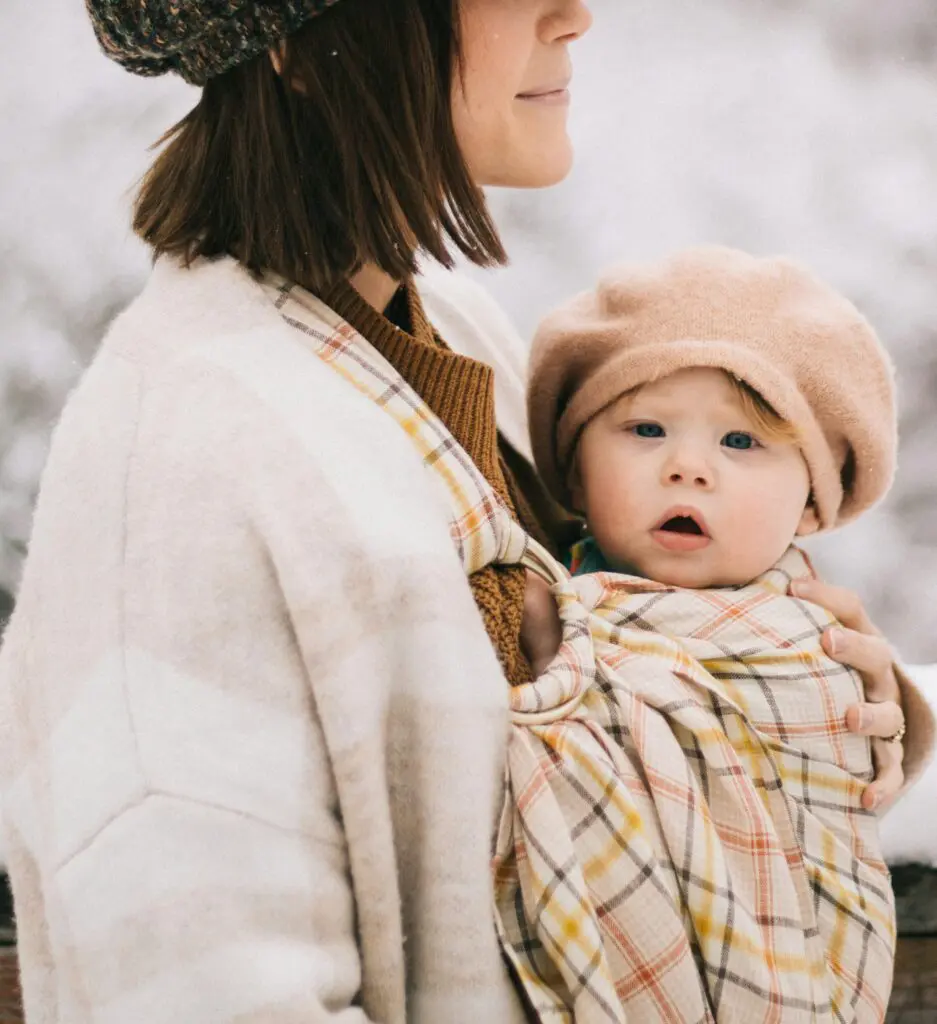
If you enjoy going on walks around the neighborhood in the winter, consider babywearing instead of pushing your baby in a stroller. Babywearing is exactly what it sounds like: wearing your baby in a wrap, sling, or carrier. For winter walks, a carrier that straps around your body with the baby facing your chest is the ideal solution. This will help protect your child from windburn and keep him or her warm against you as you both enjoy the festive atmosphere outdoors.
If the temperature is below freezing outside, it’s best to avoid longer walks and to keep your trips outdoors as short as possible. Your baby is unable to regulate his or her temperature in the same way that an older child or adult can, so avoiding exposure to extreme temperatures for extended periods of time can help reduce the risk of your little one suffering the onset of hypothermia. If you choose to use a stroller, be sure to dress your baby in winter clothing (a warm hat, gloves, etc.) and cover him or her with a blanket. However, avoid covering the stroller. Plastic covers or heavy blankets can prevent proper air circulation for your baby, which may lead to an increased risk of sudden infant death syndrome (SIDS).
Bonus Tip: Add an extra layer of clothing when bundling your baby up this winter. Our adult bodies are capable of enduring more extreme temperatures than your newborn, so it won’t hurt to add one more layer than you’d wear when venturing outdoors in freezing temperatures.
3. Take Precautions to Prevent Dry Skin for Your Newborn
You might have noticed your own skin becoming dry as outdoor temperatures get colder. This is no different for your baby. Your newborn is prone to dry and itchy skin because he or she has a less-developed, weaker skin barrier. But that doesn’t mean increasing how often you bathe your baby—excessive exposure to water can actually dry out your baby’s skin. Find out best bathing practices for newborns here. After your baby’s bath, be sure to apply a good moisturizer that’s ideally fragrance free and has fewer ingredients.
Should you turn up your indoor heat to keep your baby warm this winter? Higher temperatures generated by indoor heating systems are often accompanied by low humidity, and this combination can dry out your baby’s particularly vulnerable skin. According to Dr. Kate Puttgen, a children’s dermatologist in Taylorsville, Utah, it’s wise to keep your home between 68 and 72 degrees Fahrenheit and around 65-68 degrees at night. Wearable blankets, sleepers, and sleep sacks are helpful nighttime attire for your baby’s first winter.
Bonus Tip: Take free parenting classes at Align Pregnancy Services to earn CARE Cash you can spend on winter baby clothes and essential toiletries like baby bathing supplies and moisturizers in our baby boutiques.
4. Know the Hot and Cold Warning Signs
How can you tell if your baby is too warm or too cold?
If you’re worried that your baby is too warm, check to see if he or she is uncomfortable. If your infant’s face is red, skin is warm, and he or she is fussy, your baby might be overheated. You can take a layer off of your baby, offer breastmilk or a bottle, and sponge bathe with warm water if needed. If your baby still seems to be too warm, call your pediatrician.
On the other hand, if your baby is fussy and feels cool to the touch, it may be time to add another layer or two of clothes. Bundle up your child and keep him or her close to you. If your baby still seems uncomfortable and his or her temperature is clearly not improving, call your pediatrician.
5. Avoid Exposing Your Baby to Sick People
The best—and most obvious—thing that you can do to keep the winter germs away from your baby is to stay away from those who are sick. Babies’ immune systems are still developing, so they’re particularly susceptible to catching colds this season. It’s especially important to take extra precautions with infants under three months of age, as they are more likely to develop complications even from a common cold. If your baby shows signs of being sick, it is recommended you call your pediatrician as soon as possible for medical advice.
Other precautions you can take include:
- Washing your hands often and asking others to wash their hands before handling your baby.
- Avoiding large crowds.
- Creating boundaries with others. It’s okay to ask that others do not kiss your baby this time of year.
Bonus Tip: One way to help enhance your baby’s immune system is by breastfeeding. If you’re able to breastfeed, your baby will receive antibodies from your milk.
Utilize Align’s Free Parenting Services
Don’t let your worries and fears keep you and your little one inside for your baby’s first winter. Sunlight and fresh air are good for both you and your baby to enjoy when you can. You can learn more about caring for your baby through our free parenting classes in Lancaster County and Lebanon County, PA. Our hotline is open 24/7—call or text us today at 717.279.1525 or request an appointment here to learn more. We would love to walk with you in your parenthood journey!
Note: This article is not to be used to replace professional medical advice for caring for your baby during the winter. Align Pregnancy Services advises reaching out to your pediatrician for accurate advice to accommodate your individual situation.